curatorial projects.
(DIS)OBEDIENT: Redefining Feminism in a Fractured Reality
Curatorial Essay by Sophie Bonet
Curated by Sophie Bonet and Carol-Anne McFarlane
ArtServe, FL
March 2020
I. A Centennial, a Fracture, a Call to Action
In March 2020, just weeks before the world shuttered under the weight of a global pandemic, (DIS)OBEDIENT: Redefining Feminism in a Fractured Reality opened as an urgent feminist intervention. Co-curated by Sophie Bonet and Carol-Anne McFarlane, with a critical contribution from filmmaker Robert Adanto, the exhibition marked the 100th anniversary of the 19th Amendment’s passage in the United States—a milestone that simultaneously celebrates women’s enfranchisement and exposes the unfinished work of gender equality.
To situate (DIS)OBEDIENT in the political climate of early 2020 is to understand it as both culmination and rupture. It emerged at the confluence of fourth-wave feminist activism, #MeToo’s dismantling of silence around sexual violence, and a growing global reckoning with systemic racism and intersectional inequities. It was conceived for a physical, communal space—a place where bodies could gather, voices could rise in unison, and art could provoke unmediated dialogue. And yet, within weeks of its opening, that space was disrupted by the COVID-19 pandemic, forcing the curators and participating artists to reimagine its public life in digital form.
This temporal fracture—the sudden shift from embodied presence to disembodied screens—echoes the exhibition’s central question: What does it mean to be disobedient in a world that demands our compliance?

Figure 1. Go! Push Pops, still from performance “500,000” (Art in Odd Places), as seen in Robert Adanto, The F Word, 2015. Courtesy of the artists and Robert Adanto.
II. Curatorial Vision: Disobedience as Method
The title (DIS)OBEDIENT encapsulates the curatorial stance: a refusal to perform docility, a reclamation of agency, and a critique of the patriarchal, racialized, and heteronormative structures that have long policed women’s bodies, identities, and narratives. In feminist theory, disobedience is not mere defiance—it is a generative act, a rupture that makes space for alternative futures. As bell hooks reminds us, “True resistance begins with people confronting pain… and wanting to do something to change it” (Feminism is for Everybody, 2000).
Bonet and McFarlane approached curation itself as an act of feminist disobedience, disrupting hierarchies of knowledge production by centering artists whose practices embody resistance. This was not an abstract feminism. It was rooted in the intersectional imperatives articulated by Kimberlé Crenshaw, recognizing that gender inequality is inseparable from race, sexuality, class, and ability. It was a feminism that, in Sara Ahmed’s words, “requires us to expose how some are made strangers in spaces that are supposed to be for everyone” (Living a Feminist Life, 2017).

Figure 2. Linda Behar, from the Under the Ruff series, n.d. Printmaking. Courtesy of the artist.

Figure 3. Sibel Kocabasi, And God Created Women with Hair, n.d. Courtesy of the artist.
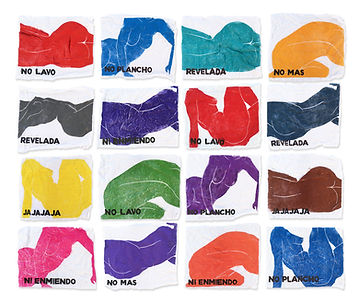
Figure 4. Doris Araujo, Revelada, n.d. Courtesy of the artist.
III.
(DIS)OBEDIENT
Manifesto
Translating our ideas and emotions into art is innate to us.
Through art, we assess our current socio-political climate.
To censor art is to censor our voices—it is to silence what must be heard.
We all need space to explore and express what it means to be human, freely, without shame, judgment, or self-guilt.
Taboos are set by people and institutions to maintain power over others.
We ask: Who benefits from this? Who benefits from the silence? Who benefits from ignorance?
When artists engage with what society calls taboos, they are not seeking shock for its own sake—they are mapping the uncharted territories of human experience and psychology. If we find such work unsettling, it may be because we have been trained in obedience to the status quo without question.
Is there a part of you that you have not yet explored?

Figure 5. Lisa Cole, Grab’em, n.d. Courtesy of the artist
IV. Thematic Currents and Artist Interventions
The exhibition’s breadth—spanning installation, video, photography, performance, printmaking, and mixed media—mirrored the multiplicity of feminist experience. Yet within its diversity, certain thematic currents emerged.
1. Visibility and Invisibility
VantaBlack’s The Invisible Black Woman series gave form to the erasure experienced by Black women—a double marginalization that renders them hyper-visible as targets of scrutiny yet invisible in recognition and solidarity. Khaulah Naima Nuruddin’s labor-intensive works honored the unacknowledged labor of Black women, while inviting those with systemic privilege to confront their complicity.
Melissa Vlahos’s Unleashed Project, comprising 108 portraits of women adorned with self-applied body paint, created a participatory archive of self-love, body positivity, and vulnerability-as-strength. In its tactile intimacy, it challenged the commodified image of women’s bodies by reclaiming them as sites of agency.
2. Bodily Autonomy and Sexual Politics
Sibel Kocabasi interrogated the ways women perpetuate traditions that suppress them, reflecting on the intergenerational transmission of patriarchal norms. Leah Schrager, Narcissister, and Rebecca Goyette—featured in Robert Adanto’s The F Word—addressed sexual agency and representation with unapologetic directness, using performance and provocation to dismantle fetishized stereotypes.
3. Pop Culture Deconstruction
Lisa Rockford’s Barbie Magic Reveal series appropriated and subverted children’s media to expose the manufactured archetypes of femininity embedded in popular culture. Claudia Bitran’s meticulous reenactments of Britney Spears’s music videos re-staged pop iconography through DIY materiality, destabilizing the seamless spectacle.
4. Resilience and Testimony
Sonia Baez-Hernández’s Reconstruction II drew from her lived experience of breast cancer, transforming bodily trauma into a site of visual and political resistance. Niki Lopez’s A Hero’s Journey mapped the path from victimhood to thriving, situating personal healing within a collective feminist continuum.
5. Intersectionality and Global Feminisms
Works by Zipporah Michel, Gillian Kennedy Wright and Marilyn Walter, and Luiza Prado expanded the conversation beyond U.S. borders, addressing child marriage, transnational cultural exchange, and indigenous epistemologies. These pieces reframed feminism as a plural, global movement that resists Western exceptionalism.
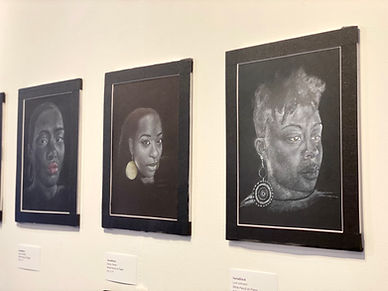
Figure 6. VantaBlack, from The Invisible Black Woman series, n.d. Courtesy of the artist.

Figure 7. Sonia Báez-Hernández, Reconstruction II, 2002. Courtesy of the artist.
V. Cinematic Lens: Robert Adanto’s
The F Word
The inclusion of Robert Adanto’s The F Word deepened the exhibition’s dialogue by bridging live gallery works with a broader feminist art history. Featuring artists such as Katie Cercone, Ann Hirsch, and Go! Push Pops, the film situated (DIS)OBEDIENT within a lineage of radical, fourth-wave feminist performance. Its presence underscored the exhibition’s multimedia approach and its commitment to documenting feminist practices across both IRL and URL contexts.

Figure 8. Narcissister, performance still, n.d. Courtesy of the artists and Robert Adanto.

Figure 9. Go! Push Pops, still from performance “500,000” (Art in Odd Places), as seen in Robert Adanto, The F Word, 2015. Courtesy of the artists and Robert Adanto.
VI. The Pandemic Pivot
When the pandemic struck in March 2020, in-person programming—including artist talks, workshops, and community gatherings—was abruptly halted. Rather than cancel, the curators pivoted to online streaming, hosting virtual screenings, discussions, and digital access to the works. This shift, while born of necessity, mirrored the digital-native strategies of much fourth-wave feminist activism, from hashtag campaigns to online performance art.
The loss of physical gathering was felt acutely—particularly in an exhibition grounded in embodiment. Yet the digital pivot extended the exhibition’s reach, making its feminist discourse accessible to audiences beyond South Florida.
VII. Collaboration as Feminist Practice
Central to (DIS)OBEDIENT was the curatorial partnership between Sophie Bonet and Carol-Anne McFarlane. Their collaboration was itself an enactment of feminist methodology: horizontal decision-making, mutual trust, and the recognition of each other’s intellectual and creative labor. Partnerships with Robert Adanto, Thou Art Woman, The Unleashed Project, and the Broward County Library further exemplified the exhibition’s commitment to networked feminist praxis.
VIII. The Statistical Landscape: Art World Inequities
The exhibition’s themes were not merely anecdotal—they were grounded in stark statistical realities:
-
Only 13.7% of living artists represented by galleries in Europe and North America are women.
-
Women artists earn 74¢ for every dollar earned by male artists.
-
At major U.S. art museums, 87% of artists in permanent collections are male, and 85% are white.
As Griselda Pollock argues, “We need to dismantle the structures that make it possible for women to be omitted from history, not merely insert them into narratives already structured by patriarchy” (Vision and Difference, 1988). By juxtaposing these figures with the works on view, (DIS)OBEDIENT made visible the structural forces it sought to disrupt.


IX. Legacy and Resonance
As the first curatorial project Sophie Bonet felt profound pride in, (DIS)OBEDIENT stands as both a personal and collective milestone. It demonstrated that curating can be a form of activism—one that fosters empathy, demands accountability, and insists on the visibility of those historically excluded.
In the years since, the pandemic has altered the terrain of cultural production, yet the exhibition’s urgency has only intensified. In a world where women’s rights remain under siege, (DIS)OBEDIENT endures as a testament to the necessity of feminist disobedience—not as a single act, but as an ongoing practice of refusal, reimagination, and solidarity.
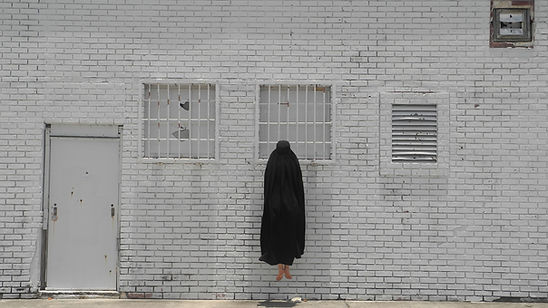
Figure 10. Sibel Kocabasi, Stockholm Syndrome, n.d. Courtesy of the artist.
Bibliography
Contextual References
Ahmed, Sara. Living a Feminist Life. Durham: Duke University Press, 2017.
Art Museum Staff Demographic Survey 2018. Association of Art Museum Directors and the National Center for Arts Research.
Artnet News and In Other Words. Women’s Place in the Art World: Why Recent Advancements for Female Artists Are Largely an Illusion. 2019.
Bhabha, Homi K. The Location of Culture. London: Routledge, 1994.
Crenshaw, Kimberlé. “Demarginalizing the Intersection of Race and Sex: A Black Feminist Critique of Antidiscrimination Doctrine, Feminist Theory and Antiracist Politics.” University of Chicago Legal Forum (1989): 139–167.
Freelands Foundation. The Representation of Women Artists in the UK. London: Freelands Foundation, 2019.
hooks, bell. Feminism is for Everybody: Passionate Politics. Cambridge, MA: South End Press, 2000.
hooks, bell. Talking Back: Thinking Feminist, Thinking Black. Boston: South End Press, 1989.
Lorde, Audre. Sister Outsider: Essays and Speeches. Berkeley: Crossing Press, 1984.
Lorde, Audre. “The Master’s Tools Will Never Dismantle the Master’s House.” In Sister Outsider: Essays and Speeches, 110–114. Berkeley: Crossing Press, 1984.
Mulvey, Laura. “Visual Pleasure and Narrative Cinema.” Screen 16, no. 3 (1975): 6–18.
National Endowment for the Arts. Artists and Other Cultural Workers: A Statistical Portrait. Washington, D.C., 2019.
National Museum of Women in the Arts. Get the Facts: Gender Disparity in the Arts. Washington, D.C., 2020.
Nochlin, Linda. “Why Have There Been No Great Women Artists?” ArtNews 69, no. 9 (January 1971): 22–39.
Pollock, Griselda. Vision and Difference: Feminism, Femininity, and Histories of Art. London: Routledge, 1988.
Sollee, Kristen. “Robert Adanto’s ‘The F Word’ Explores Feminism’s Fourth Wave.” The Huffington Post, February 23, 2016.
The Art Newspaper. “Representation of Women Artists in Global Exhibitions, 2007–2018.” London: The Art Newspaper, 2019.
Whitney Chadwick. Women, Art, and Society. London: Thames & Hudson, 1990.
Exhibition Sources
Adanto, Robert. The F Word. Documentary film, 2015.
Araujo, Doris. “Revelada” and artist statement. dorisaraujo.com.
Báez-Hernández, Sonia. “Reconstruction II” and artist statement.
Behar, Linda. “Under the Ruff” and “Retablos” series. lindabehar.net.
Bitran, Claudia. Britney Works (Tour). claudiabitran.com.
Cercone, Katie. Solara Saturnali: Kawaii Kali REDUX. katiecercone.com.
Cole, Lisa. Believe Me and Grab’em.
Goyette, Rebecca. Crustacean Temptation. rebogallery.com.
Kocabasi, Sibel. And God Created Women with Hair and Stockholm Syndrome. sibelkocabasi.com.
Lopez, Niki. A Hero’s Journey and The Darkest of Gold. nikilopez.com.
McFarlane, Carol-Anne. Target and artist statement. carolannemcfarlane.com.
Michel, Zipporah. Scholar From Niger, Fatoumata and Nepalese Child Bride, Dhriti. zipporahmichel.wixsite.com.
Narcissister. Performance works. narcissister.com.
Nuruddin, Khaulah Naima. Artist statement. khaulahnaima.com.
Pratico, Lori. Ladder of Intent and artist statement. girlnoticed.org.
Rockford, Lisa. Barbie Magic Reveal series. lisarockford.com.
The Unleashed Project. Melissa Vlahos. melissavlahos.com.
Thou Art Woman. [MIS]BEHAVE: Lesbian Folklore & More. thouartwoman.com.
VantaBlack. The Invisible Black Woman series.
Walter, Marilyn, and Gillian Kennedy Wright. Where the Past, Present, Future Meets. kennedywrightdesigns.com, marilynwalter.com.
Zipporah Michel. Artist statement.